Cappadocia in Winter: Snow, Fewer Balloons, Better Photos
“Isn’t Cappadocia closed in winter?” We hear some version of this question every December, usually from someone who has already found a cheap flight for January and is looking for a reason to book the session anyway. It isn’t closed — far from it. The valleys are open every single day of the year, the cave hotels stay warm, and some of the quietest, most striking photographs we take all year come from January and February mornings. Winter is simply a different Cappadocia, and it rewards people who come prepared for what it actually is, rather than for what the summer brochures show.
What winter actually looks like here
Low season runs properly from December through February, with late November and early March as a milder in-between. Daytime temperatures usually sit between 2°C and 10°C; the hour before sunrise is colder, often close to freezing, and a session genuinely calls for a real coat rather than the light layers that work in June. Snow does not fall every week — most winters bring several real snowfalls rather than one long white blanket — but when it does settle on the fairy chimneys and the valley floor, it tends to hold for a few days at this altitude before it melts, and that window produces photographs that look like nowhere else on the calendar. Fog is also more common this time of year, rolling low through the valleys at first light and usually burning off within an hour — it photographs beautifully, and it tends to show up uninvited.
The balloons, honestly
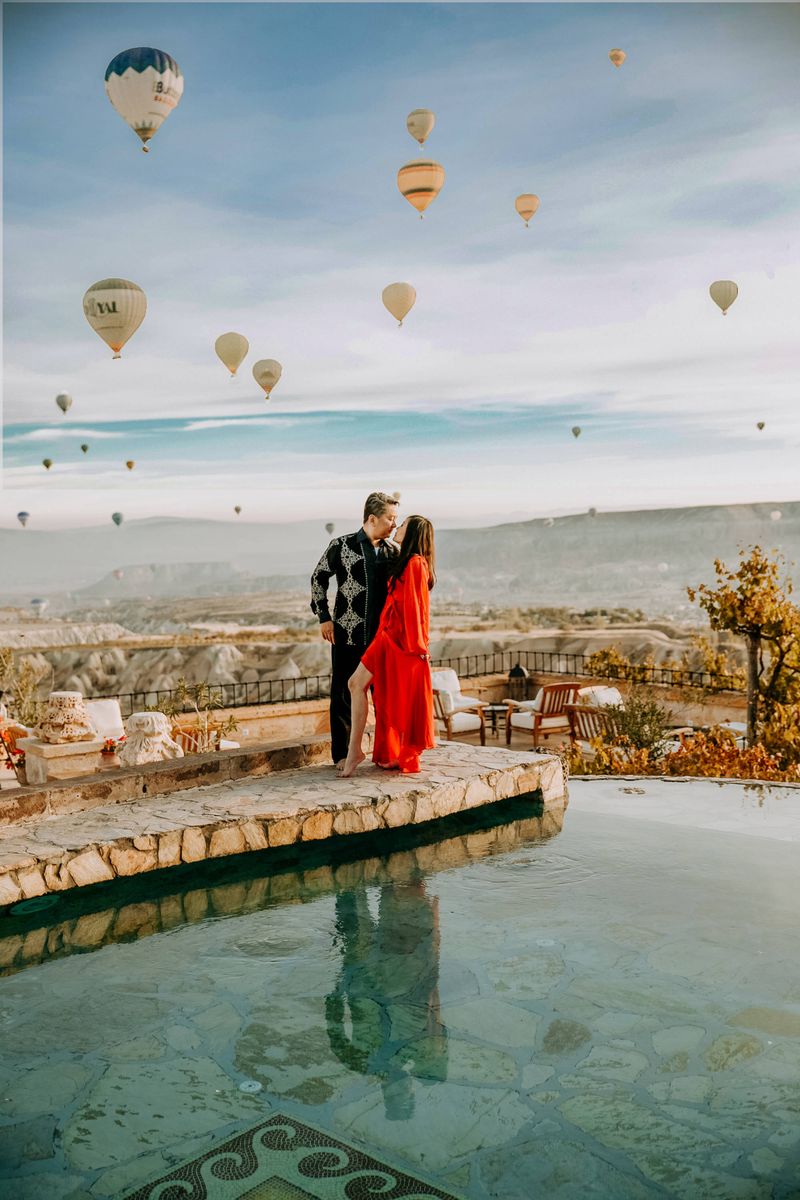
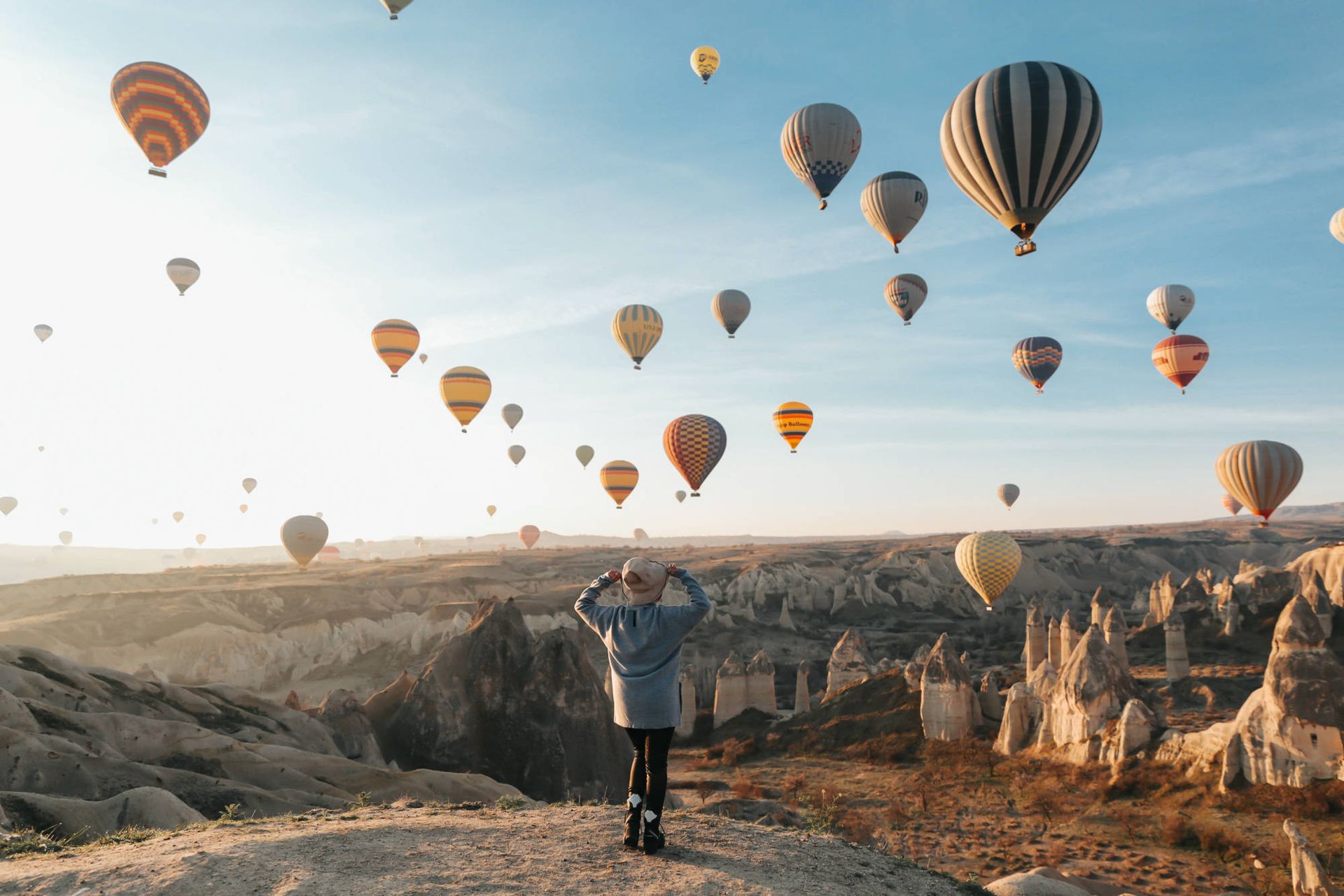
Balloon flights depend on wind and visibility in every season, and winter simply has more mornings when conditions don’t allow it — fewer operators fly, and the ones that do sometimes cancel with little notice. Some winter mornings are completely clear and the sky fills with balloons just as it does in July; others see none at all for several mornings in a row. We will never promise you a particular number of balloons on a particular date, winter or otherwise — nobody photographing here controls the wind. What we can promise is that we check the forecast with you the evening before, and plan the viewpoints around whatever that specific morning is actually going to give us. On the mornings without balloons, the valleys under snow or low cloud carry the session on their own — most of our winter guests tell us afterwards that they missed the balloons less than they expected to.
Why winter light often works in your favour
The sun sits lower in the sky through the whole Cappadocia winter, not only at sunrise and sunset, so the soft, directional light we usually chase for thirty or forty minutes in summer can last closer to an hour. Sunrise also arrives later — often past 07:00 rather than before 05:00 — so a winter session does not demand the same pre-dawn alarm a July one does. The valleys themselves are close to empty: the tour buses that fill Love Valley and the Uçhisar viewpoints by mid-morning in peak season mostly stop coming in winter, which means more time at each spot and far fewer strangers walking into the background of your frames.
Dressing for the cold without losing the look
Long dresses, coats and even furs photograph beautifully against bare rock and a dusting of snow, and a warm layer underneath is no different from one hidden beneath a summer dress — it simply doesn’t show in frame. We bring our own flying dresses and signature props regardless of season, and outfit changes are still unlimited, so a heavier coat for the walk between spots and a lighter look for the actual shot work well together. We send a full style guide after you book, adjusted for whichever month you are travelling in.
When snow or rain takes over
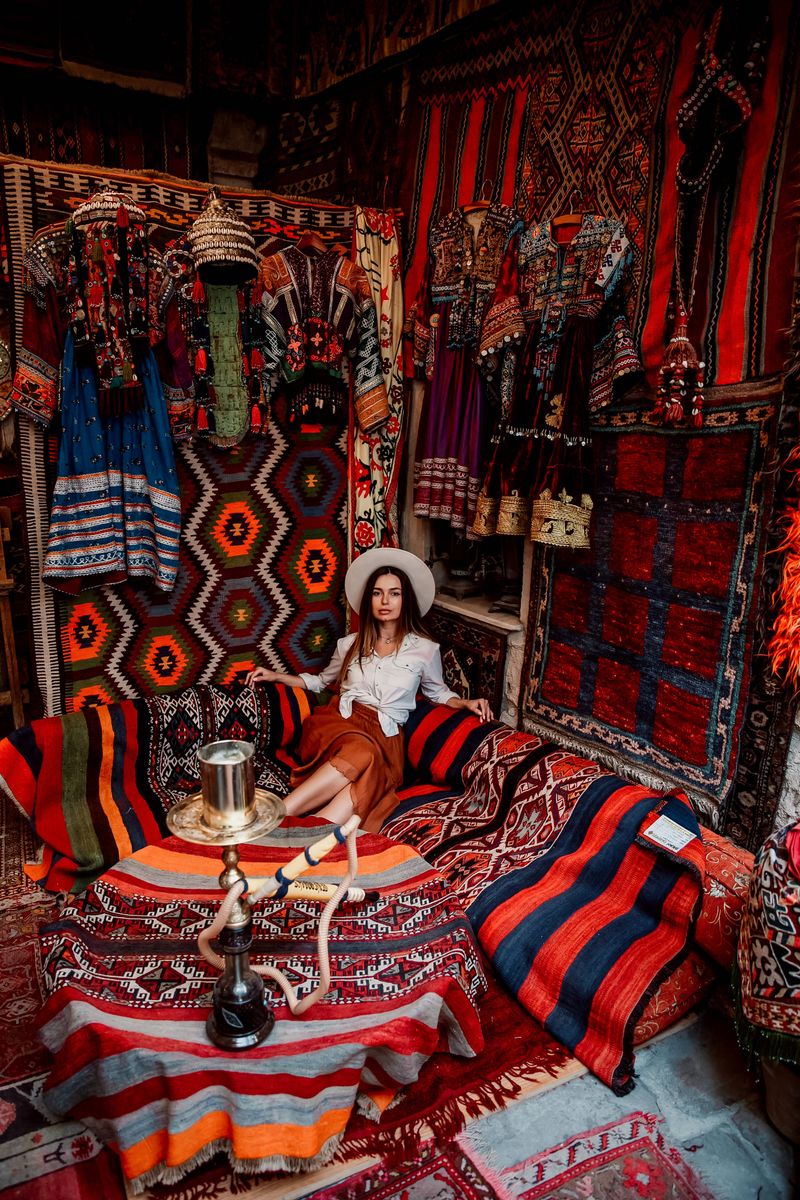
On the mornings when the weather genuinely does not cooperate — heavy rain, thick fog that never lifts, or snow too deep to walk the valley trails safely — we move the session indoors. A century-old carpet shop glowing with mosaic lanterns is, if anything, more atmospheric in winter than in summer, and it is one of the few scenes in Cappadocia that looks exactly as good regardless of what the sky is doing outside. A cave hotel terrace is another option on a milder weather day — breakfast with balloons or snowflakes drifting past, shot right where you are staying.
A realistic winter week
| When | Typical morning | What to expect |
|---|---|---|
| Early Dec / late Mar | 5–10°C, snow unlikely | Closer to shoulder season — fewer crowds, balloons on most clear mornings |
| Mid Dec – mid Jan | 0–5°C, occasional snow | Quiet valleys, a real chance of a dusting on the rock formations |
| Late Jan – Feb | -2–4°C, best odds for snow | The coldest, stillest mornings — and the best chance of a true snow session |
So, is it worth it?
If you are set on a specific number of balloons and a warm sunrise in a t-shirt, winter is not your season — book April or September instead. But if you want valleys with almost nobody else in them, light that holds for an hour instead of twenty minutes, and the chance — never the certainty — of waking up to snow on the fairy chimneys, winter Cappadocia photographs like nowhere else we work. Some of the frames our past guests have printed largest came from grey January mornings nobody would have picked from a brochure.
Curious what a winter session includes? Take a look at our packages.